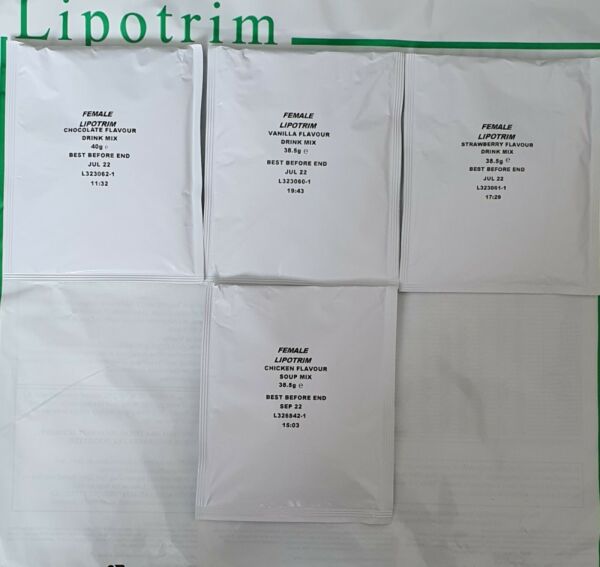
From a simplistic perspective, if you want to lose weight, just consume less energy than your body needs to use in order to sustain your body and your body will be forced to use it’s own internal supply of energy.
The body has three different supplies of energy, glucose in the bloodstream from sugary foods or carbohydrates that have been broken down by the body into sugars. This form of energy is the quickest and easiest energy source for your body to use. Then there is glycogen in your liver and finally energy stored as fat, that first needs to be broken down by the liver. The process produces chemicals called ketones as a by product.
The aim of a very low calorie diet is to quickly deplete the glucose and glycogen energy stores in order to efficiently burn fat in a state known as ketosis. There are other diets that try to achieve the same thing such as the intermittent fasting 5:2 diet whereby for two days a week participants consume less than 800 calories (male) or 600 calories (female) and keep to a low carbohydrate diet the rest of the time without counting calories. There are lots of other “keto” type diets that encourage higher protein and lower carbohydrate consumption such as Atkins and the Paleo diet.
Many healthcare professionals and nutritionists are very critical of these diets because they can sometimes be nutritionally unbalanced if cutting out whole food groups and also because they are not sustainable long term so it is easy to put weight back on, and I agree that a VLCD is not sustainable, it doesn’t resolve the issues that lead a person to become obese in the first place and thus far my experience has been that it is easy to put any weight lost back on very quickly.
Our brains have evolved over millions of years of famine and scarcity of food supply to favour energy dense foods like carbohydrates. Eating as much of this kind of food as possible gave human beings the best chance of survival through harsh winters where food was more scarce. Our brains still have these same instincts but we live in an age where food science has created an abundance of highly processed rich carbohydrates that are cheap and readily available.
Unfortunately evolution is much slower than changes in our environment and there are still places in the world where those adaptive traits are useful for survival and that this blip of abundance may change as human population and climate also evolve but for now our human instincts to seek out dense calorie food is working against the health of the population with as much as one third of the world population now being overweight or obese.
So, given that VLCDs do not work in the long term, why am I still doing one? The answer is scale. If you are just in the overweight or obese category, you’re better off just avoiding processed foods, watching your carbohydrate intake, and switch to complex carbs like brown rice and pulses if you can and keeping an eye on portion sizes. Don’t worry so much about fat and sugar, you’re actually probably better off avoiding “diet” food altogether and just keep your diet as natural as possible. Remember, the diet industry has a vested interest in you failing or yoyoing so that you keep going back for more of their terrible products.
However, when you’re super morbidly obese like I am it is almost impossible to stay motivated when losing one or two pounds a week. It’s the case of the lesser of two evils. If I stick to my VLCD, I am guaranteed to lose a lot of weight quickly. I’m essentially going into famine mode. My metabolic rate may slow down at first but I can build that up through exercise and building muscle. Muscle burns more calories even at rest, so the more you have the better for weight loss, even if some weeks you lose less weight because the muscle you gain is more dense than the fat and retained water you lose.
It’s absolutely soul destroying to follow a diet like weight watchers, slimming world and work really hard to lose a few pounds then put it back on with a blip. I’ve tried all these diets, they didn’t work for me.
I found them very feminised environments. I was often the only male in a group full of women. Not that there’s anything wrong with that per se but the conversations, interests and suggestions tend to be catered for women. You will not find me doing a yoga class no matter how good an activity it is for weight loss and yes, I know, there are some men that love aerobics too.
You will not get me swimming either. It’s a shame because I was like a fish when I was young but for men you can’t wear a costume that hides everything. I’m not saying it’s easy for women either, it certainly is not and society is very judgemental of women’s bodies too but there are some differences in the things a fat guy will experience that are never talked about because men don’t tend to speak. Things like what it’s like as a bloke to have a larger chest than most women. It just kills you inside.
There’s a huge amount of misunderstanding when it comes to male psychology. At one weight loss group I went to a woman complained that her husband doesn’t have any emotions, then she tells a story where her husband got irritated at her. It never occurred to her that that was him showing his emotions.
Men and women show their feelings in different ways and at different times but please do not mistake those differences for men not having feelings. We are human, just like you. We just respond differently sometimes, and that’s ok. It’s not that one way is better than the other, it’s just different.
Whenever I talk about these difference someone, somewhere gets offended and assumes I’m sexist and that men and women are interchangeable blocks yet the same people will happily talk about the disadvantages women deal with as if they are real but men’s are not.
Sorry, bit of a side rant there but having services catered around the different needs and motivations of men and women is important for success. There are some men only groups starting to pop up now. I tried an men only Overeaters Anonymous group but it was too religious in nature for me.
Walking groups, walking football, men’s sheds (that haven’t been taken over by Age Concern or women that want to control them), photography clubs, social poker nights etc, these are the kind of things that can make a difference. Masculinity is the answer, not the problem!
Managing blips is the key to long term success
In 2012 I lost 14 stone 10 pounds on a VLCD and I joined a walking group and was walking every week around three reservoirs in Oldham but in the end I had a blip for a couple of weeks and put on a bit of weight, I felt ashamed and didn’t want to be seen again until I lost that weight back. I’d tell myself I’ll lose the weight then I’ll go back but the longer I was away, the more I’d put on and the positive snowball effect that encouraged me to lose the weight was suddenly acting in reverse and the weight piled back on. If I think about it, it’s very similar to a gambling addict chasing his/her loses.
Shame is a very powerful human emotion and by writing about everything so publicly, I’m trying to take away that power and fear of humiliation. If you’ve already humiliated yourself, what else is there left to fear?
Right now the biggest problem I have is my mental health and I’m hoping that by losing weight quickly I’ll regain some of that confidence and belief and get me back to being the happy, bubbly, occasionally funny guy and not someone drowning in anxiety.
Long term this isn’t the solution. I think I’m at a point of accepting that I might need surgical help to keep me permanently on the right path, despite it’s associated risks and complications. I’ll write about that separately sometime.
In the meantime, my focus is locked on being 10 stone lighter in a years time, getting out more and walking again and seeing if I can stabilise my mood. I need things to look forward to, I need hope and I need support.
The previous two times I’ve lost a serious amount of weight, I was using the lipotrim programme, firstly with the support of a hospital ran clinic and the second time via a pharmacy so I’d have human contact each week to check my progress and the fear of disappointing the staff played a role in keeping me on track.
I don’t have that this time. This time I’m using the http://www.shakethatweight.co.uk diet, same idea but there’s more variety of the shakes and soups. They don’t taste as bad, although I find the savour ones pretty intolerable, which is a shame because I’d rather not have shakes all the time. It’s a lot cheaper than the pharmacy or hospital led programme but it’s not supervised which is why I need to keep writing regularly and for people to check in on me to keep me motivated.
I’m fortunate to have an amazing wife who bends over backwards to make this as easy for me as possible, making my shakes, always making sure I have plenty of water (water helps stop the hunger, I drink between 2-4 litres of it a day), putting up with my moods, doing her own cooking and washing up when normally the washing up is my job. I couldn’t do it without her, she’s amazing!
I wish I could go back to myself nine years ago and just convince myself to stop caring about what other people think and just get back on that horse and go again. I wish I knew what the long term solution is to break the yoyo cycle.
I’m an addict. I’m addicted to food. Cold turkey (and I don’t mean what you have in butties the days after Christmas dinner) is much more easy for me than asking me to eat three small meals a day right now but even if I have surgery, I need to find a way to break my dependence on food for emotional regulation. It’s all I’ve ever known so it won’t be easy, but then when have I ever done anything the easy way?
 Rant Over