Love Actually: It’s about Love, actually

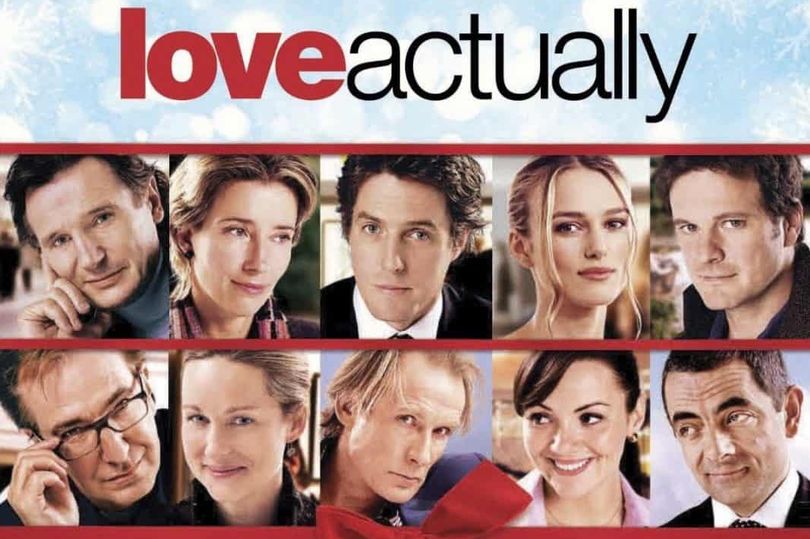
It feels like every Christmas a bunch of opinion pieces decrying the sins of 2003 classic Love Actually crawl out of the pipe works. A cynic may even suggest that the aim of such publicity is the equivalent of pantomime designed to get the film back in the public consciousness? Given that such articles led me to rekindle my warm memories of the stories involved and watch the film again, if that was the real goal, then it has been successful.

This year, even the films brilliant producer, Richard Curtis has been getting in on the self flagellation and repudiation of the film, claiming that the film was not diverse enough. I beg to differ. In fact, I think you will be hard pressed to find an equal in terms of the diversity of characters and human emotions on display in a single 2 hour and 15 minute masterpiece.

It’s unusual for me to be singing the praises a film in the category of “Romantic comedy”, a category of such insipid and predictable storylines, completely devoid of depth, that a precipitously place vomit bag may be in order. It’s always the same, insecure woman meets flawed man who becomes besotted with her and falls all over himself to win the fair maiden. She resists until his persistent charm avails and Rapunzel doth let down her hair for her prince. Said prince’s rough edges, remoulded as he changes for her.

Many of Richard Curtis’s other films follow said path, especially Notting Hill and Four Weddings and a Funeral, but I’ll forgive him this indulgence for the brilliant observational comedy he has blessed upon us in the form of Blackadder, Mr Bean and the Vicar of Dibley.

Love Actually reminds me of the work of another British screen write, Jimmy McGovern and his gritty northern drama series, The Street. In The Street, each episode focused on a specific story of a certain character and the tribulations they faced. Each character, relatable, human, flawed. The other characters dovetail around each other as minor actors in each others story. It creates this sense of a community rather than just individual tails of love and misfortune.

The same can be said of Love Actually, as there is a connection between each of the characters. There is a voyeuristic quality to it, particularly with the final airport scene that sees the various characters reuniting with there loved ones, something that rings authentic with how our modern lives intertwine. Sometimes we are the minor characters in the stories of others and sometimes we play the supporting role. We all have a story, hopes, dreams, the agony and the angst, the joys and the laughter, a shared human experience that unites all despite the unique flavours of our experiences.

If you haven’t watched the film, I’m going to unveil it for you but I won’t be able to do it justice so I recommend you watch it for yourself and make your own mind up. Perhaps you won’t be impressed with the sizable dose of cheesiness, the adolescent humour or quintessential Britishness of the film, and that’s perfectly ok, diversity is not about everybody being the same or equal even, it’s about differences of opinion and mine is no more deferential than anyone else’s, just don’t watch it through the lens of ideology. The Bechdel test is not a measure of the quality of a film, it’s a measure of pretentious ideological purity masquerading as something of value. If all you do is look for sexism, racism, “heteronormativity” etc, then that is all you will find, regardless of whether it is tangible or sword fighting a fart.

I’m going to quote verbatim the opening narration of the film as I think it’s very poignant.

Whenever I get gloomy with the state of the world, I think about the arrivals gate at Heathrow Airport. General opinion’s starting to make out that we live in a world of hatred and greed, but I don’t see that. It seems to me that love is everywhere. Often it’s not particularly dignified or newsworthy, but it’s always there – fathers and sons, mothers and daughters, husbands and wives, boyfriends, girlfriends, old friends. When the planes hit the Twin Towers, as far as I know none of the phone calls from the people on board were messages of hate or revenge – they were all messages of love. If you look for it, I’ve got a sneaky feeling you’ll find that. 

The narration is read over the scenes of an airport arrival haul, with people hugging and kissing as they are reunited.

The first character we meet is Billy Mack, a washed up popstar has been trying to rejuvenate his flagging career with that very British tradition of a Christmas pop song. The song is a cheesy reincarnation of a 90s classic pop song “Love is all around” by Wet Wet Wet, albeit with the word Christmas replacing Love.

Bill Nighy’s character manages to achieve a Christmas number one despite several comedic promotional appearances where he is a little bit to honest for his own good. At the end of his story, he rejects the superficial celebrity of an Elton John party in order to spend time with his long suffering chubby manager Joe, played by Gregor Fisher. The bromance between the pair is sweet and resonates a lot with the kind of male mutual appreciation I recognise from my own friendships.

Next comes Liam Neeson’s character, Daniel, a recently widowed step father. To me this nod to the heartbreak of losing the ones we love is very important. For some Christmas is a joyous time of year but for the broken hearted and lonely, it can be a very difficult period filled with memories of loved ones that are no longer there.

There is the poignancy of the funeral and his attempts to connect with his young step son, who himself turns out to have a crush on a girl from his school, who is also a singer. In his attempts to woo the young lady, the boy decides to learn how to play the drums and by the end of the film, plucks up the courage to evade airport security in order to tell her how he feels, encouraged by his step dad to seize the day.

I’m sure many of us can relate to those early feelings of love and the fear of rejection. In the end, the boy gets a kiss before the older girl gives him a peck on the cheek before flying away to America.

Then there is the rogue, Colin Frissell, played by Kris Marshall. His character is full of confidence but lacking in success finding a girlfriend. Always in the background and invisible to the main characters, he still optimistically comes to the conclusion that he’s just living in the wrong country and that his English accent would bring him better luck in the United States.

Much to the surprise of his friends, Colin does head for the states and finds three girls at the first American bar he enters, all of whom are enthralled by his accent and offer to accommodate him for his trip, but being desperately poor, they only have one bed to share and can’t afford pyjamas so sleep naked.

Critics of the film see this as sexist and objectification of women. They will tell you it’s all about the “Male Gaze” but they’re entirely missing the point. The comedy is in the ridiculousness of the situation. It would not be a heart warming end for Colin if he just disappeared into the duvets at his parents dwellings. In fact, I think we can all learn from the optimism of such a character, not willing to let other people’s negativity win, he bought his lottery ticket and he won. Rather than sexist or objectifying, I think its a heart warming tail of persistence.

The story of John and Judy, played by Martin Freeman and Joanna Page is equally comedic in nature, the pair meet as stunt doubles for adult film scenes and make polite chitchat about the weather and traffic. Despite the context, the pair are quite sweet and innocent. There is a kindness to John’s character, caring about the welfare of his female colleague. It goes to show that love can be found in the places we least expect it. In the modern age of swiping for love on a smartphone, there is a lot to be said for the lost art of just meeting people at work or whilst out and about socialising.

Speaking of work colleagues, the darker side of human relationships is evident in the case of the character played by Alan Rickman. Rickman plays a middle aged father of two and company boss that allows himself to be seduced by an employee that should have known better. He’s a character designed to be the pantomime villain as his wife, played by Emma Thompson has her heart broken, firstly watching him dance with his seductress at the office Christmas party, then with the realisation that the expensive jewellery she catches him buying at a department store wasn’t actually for her but for the mistress.

By the end of the film, the pair are reunited but we do not know whether Rickman’s character will get a second chance after realising the foolishness of his behaviour or whether the couple will go their own separate ways. It’s a classic warning tail to be grateful for what you have and not chase the pot of gold at the end of the rainbow in exchange for the sunshine and showers that are much more tangible.

In the same office, we meet another lovestruck pair, designer Karl, played by Rodrigo Santoro and Sarah, played by Laura Linney. On this occassion, the boss attempts to play matchmaker by bringing the two together given the obvious attraction between the pair.

Unfortunately, things don’t go smoothly as when the pair do eventually pair up, Sarah’s brother, whom has learning and mental health issues takes priority. This story is not just about the romantic love between a man and a woman but about the familial love between two siblings and Sarah’s self sacrifice, putting the needs of her brother and his condition above her own. Perhaps one day the pair will be able to move past the hurdles involved and integrate Karl into the mix alongside her brother? Perhaps fate is a cruel master that will keep the pair apart? We don’t know. It’s the kind of dilemma that happens in real life, the course to love seldom runs smooth.

The film does a good job of exposing nuance and complexity and the love triangle between newly wed characters Peter (Chiwetal Ejofor) and Juliet (Kiera Knightly), and Peter’s best friend Mark (Andrew Lincoln) is a good example. Juliet thinks that Mark disapproves of her as he doesn’t engage with her much. Some of Mark’s family think he is secretly gay and in love with Peter. The truth is that Mark is secretly in love with Juliet but keeps himself a way because of his friendship with Peter. Sometimes we can fall in love with the wrong person or the right person at the wrong time.

The scene where Mark confesses his love in the form of written cards, whilst pretending to be a carol singer is so iconic it has even been covered by Owl Kitty.

I have seen critics describe this behaviour as stalking, which is absurd. Despite his feelings, the character sacrificed his own heart for the benefit of his friend and the woman he loved. I think that’s a very beautiful thing.

The penultimate couple from the film is that of Jamie, played by English heartthrob Colin Firth and Aurelia, played by Lucia Moniz. It’s easy to miss, but Jamie’s character begins in a relationship with another woman, whom he discovers cheating with his friend. He then spends a few weeks with hired help in the form of Aurelia, but there is just one problem. She can’t speak English, only Portuguese and his attempts to speak French are not perhaps the most useful.

The story unfolds like a two ronnies sketch where the pair each attempt to talk to each other, often saying the same thing in their native tongues but despite the linguistic barrier, a bond develops. It speaks to the idea of love enduring and being able to overcome barriers, whether that be language or culture or the acceptance of others.

After Aurelia returns home, Jamie spends his evenings learning Portuguese. He flies out to her homeland, asks her father for permission to ask her to marry him, which initially causes confusion, as there are two daughters, before a very public proposal in broken Portuguese, followed by an acceptance in English, it turns out Aurelia had been learning English too, “just in cases”.

The final couple is single British Prime Minister, David, played by Hugh Grant whom becomes infatuated with one of his staff, personal assistant Natalie, played by Martine McCutcheon who persistently ends up swearing in front of him. I can imagine the authenticity of someone like Natalie would appeal to and ground the sort of person that is used to being treated with deference.

Anyway, after a meeting with the United States President, whom attempted to use his position to seduce Natalie despite being married, the British Prime Minister stood up to the more powerful bully, and publicly humiliate him at a press conference. It’s the kind of Prime Minister us Brits can only dream of, someone whom is humble yet not prudish, principled yet honest, strong yet relatable.

The Prime Minister ends up searching the street where Natalie lives to find her after reallocating her duties, ending up sharing his car with a child dressed as an Octopus, whilst trying to apologise, as you do.

The couple are then caught kissing after their backstage view of the children’s nativity performance becomes a somewhat more public affair.

I really like the format of the film and the fact that the characters aren’t perfect. I can’t relate to some of the films made today where characters are either perfect in every way or completely clueless and devoid of depth. I’ve always preferred real life stories for this reason. Real life often writes more interesting characters than pretentious Hollywood directors or cookie cutter film studies that make films like they’re making a burger. Give me humour. Give me sadness. Give me quirky and peculiar. Give me Love, actually.


The agnostic case for faith

As a large brained mammal, human beings have the capacity to think beyond the instinct driven survival mechanism that is still an important part of how our brains operate. This capacity has led to the ability to create complex tools modelled on the natural world around us and the ability to inquisitively ponder how and why we are here as well as rumination over life beyond our own existence.

Every civilization has created ways to codify that meaning of life in the forms of philosophy and theologies, with different theologies taking centre stage with the passing of and expansion of such civilisations.

The secularisation of modernity

In my lifetime the anglosphere has moved from a society underpinned by theological societies to more secular systems of belief although I’m starting to observe more social commentators questioning the wisdom behind the degradation of Abrahamic belief systems in the western world.

I noticed in the mid-2010s that a form of pious atheism was taking hold. Instead of Christianity, Judaism and Islam, new secular beliefs in socialism and other similar ideological beliefs were taking over and despite being agnostic, I could see that the vacuum left by organised religion was being replaced by nouveau religions that lacked some of the underpinning positive values that religious faiths had in common.

“Religion causes war?”

Some atheists would make arguments such as “if there were no religions, there would be no wars”. As someone with a fascination for history, I knew that this was a fallacious argument. You need only look at the Second World War with Mussolini’s fascist national socialism and Hitler’s racial national socialism, both very secular of mindset, squaring up against the Soviet Union’s class based socialism as well as non-secular states such as the Christian underpinned United Kingdom and the United States.

Conflict between human colonies predates modern religion. War has always been a competition for resources, of course there have been wars fought under the justification of religion but if you peek beneath the thin veneer of religious intolerance lies a deeper truth about not just human beings but the nature of survival itself.

Indeed, the most tyrannical regimes known to modern man have been secular affairs. There is no viable justification for non-theists to claim moral supremacy in terms of capacity for harm to other human beings.

“I don’t believe in anything?”

Another exception I have taken to atheist claims is that there identity is based on an absence of belief. Some of those same atheists that have claimed that they do not believe in something, have interests in phenomena such as astrology, alien life forms or the supernatural.

My conclusion that believing in things for which we do not have evidence is very much part of the human experience. We can acknowledge the things that we believe without reason or we can pretend that our beliefs are based on some special knowledge that only those that share our views have critical access to, however, in my view that in of itself is a denial of the large brained mammal that we are.

The value of faith

Whether or not you believe in an omniscient deity or not, I think there is a good argument for the value of having such a belief system that can be beneficial to those that hold that faith.

Even if it is simply a placebo effect, we can note that those with faith are more likely to recover from serious injuries rather than dissolve into a nihilistic abyss of hopelessness.

Perhaps the moral messages codified by religious texts can be beneficial in terms of the way religious followers might sometimes treat each other better? Perhaps those faiths can give meaning to events that would otherwise seem random and chaotic?

Perhaps religion can provide comfort to those that are bereaved? I remember going to the funeral service of a friend that sadly passed long before his time was due and how difficult it was to console his family with words of comfort without that common framework of hope for something beyond decaying of the flesh.

Despite my own agnosticism,, at the passing of a beloved aunty, their catholic faith and belief in a reconciliation of loved ones passed was still a comfort.

The difference between agnosticism and atheism

I should probably explain what I mean by agnosticism as it can be easily confused as a synonym for atheism when in actuality it is different.

Agnosticism is the belief that “human reason is incapable of providing sufficient rational grounds to justify either the belief that God exists or the belief that God does not exist.”

My spin on it is that I believe the existence of a literal deity is of low probability but it is not something that science can discount conclusively.

How would one prove the existence of a mythical creature sure as the Loch Ness monster? Well, by finding said creature. How do you disprove the existence of the creature? You would need to drain the Loch, which would upset quite a lot of Scottish people. It is easier to prove the existence of something than the lack of existence. You only need to find something once then you can stop looking, disproving something that is meant to be omniscient and omnipresent is nigh on impossible.

That’s not to say that I believe that Nessie is in the water, or that God exists, but it is beyond our capacity to disprove something that represents that which is unknown. I’m starting to feel a little Donald Rumsfeld coming on with his famous speech.

Reports that say that something hasn’t happened are always interesting to me, because as we know, there are known knowns; there are things we know we know. We also know there are known unknowns; that is to say we know there are some things we do not know. But there are also unknown unknowns—the ones we don’t know we don’t know. And if one looks throughout the history of our country and other free countries, it is the latter category that tends to be the difficult ones.

Donald Rumsfeld, 2002

Atheism is different, it is a belief that deities do not exist.

I know some atheists will reject this definition because I’ve called it a belief and they believe that it is the absence of a belief but I’ve already explained why I believe that the notion of a lack of belief is untenable.

Pascals Wager

Then there’s the Pascal’s wager argument. If I believe in a deity and I am wrong, I have lost nothing. I may have benefited from comfort and a foundation to base my life around during my lifetime. If I believe in such a deity and I am correct, I have gained the fruits such faith promised.

If I have no such faith, there is no winning position, the prize for being correct is decay. Perhaps you could say that I might utilised more of my life on things that matter to me, but I’m not sure hedonism is a virtue I’d aspire to.

Can you control what you believe?

There is certainly a case for the value of theism. However, despite being able to recognise the benefits of such beliefs, that does not mean that it is possible to believe something that you do not believe.

People do change their minds, particularly when exposed to new information but I am slightly sceptical about the convenience of changing of beliefs as a way to deal with cognitive dissonance or discomfort.

Moral superiority?

Additionally, whilst I see the benefits of faith and have disdain for those that would mock another person for having such beliefs, I also disagree that theists have moral superiority either. If you only treat other human beings empathetically and with compassion out of fear of a punishment, is that really morality at all? Nobody has a monopoly on kindness, and in fact, the message of redemption and forgiveness can be used as a get out of hell free card after committing atrocities against another person.

No human being is perfect and I see human being very much in terms of complex input-output machines. Our beliefs are the culmination of both our experiences and our biology. In fact, it’s a bi-directional feedback system with our environmental decisions (sexual selection for example) feeding back into our biology and our biology feeding into our environment (natural selection). I see the human brain as a complex computer with hormones and electrical circuitry that we have learned to mimic. We have become our own Gods of silicon children.

What is God?

If you ask me if God exists, I would tell you yes, but if you ask me what God is, my response would be different to a theist. I see God as a kind of metaphor to explain the things which we do not understand, an acknowledgement of the incompleteness of our knowledge and scientific capability. I wonder whether the stories contained within the great religious books of time were meant to be read with the understanding that they are a combination of historical counts of the latter days of the Roman Empire as well as stories passed on from one generation to the other that are not meant to be taken as literal but as a representation of what man has learnt from existence. Story telling is a powerful and uniquely human trait.

The questions that vex me around death and Christian faith

When I think about the consequences in terms of my beliefs without theism, it does lead me to some uncomfortable taboo questions about death.

If I take the Christian faith of my parents and more specifically the belief in heaven and a reunification of loved ones based on a common acceptance of the forgiveness of Jesus, what is meant to happen should they pass with faith and I pass without meeting the necessary entry requirements for such a utopia?

Are they expected to be happily reunited with only a selection of those whom they have lost? Is the permanent loss of a closed loved one not a punishment for them? Do I get a pass on the basis of their acceptance? Is there a version of whatever my soul is meant to be that they get to keep, and another version of me made to suffer for not signing on the dotted lines?

Is forgiveness of sins really forgiveness if it comes with acceptance criteria? What of those that have committed heinous acts in their lifetime but have signed on the dotted line? Will they live in harmony in this utopia? I simply can’t find a logical way to square the complexities in a satisfying way.

Nihilism isn’t the answer

My own belief that when life expires, it expires is no more satisfying. Given that there has been life of earth for a length of time I cannot even conceive of, and the number of homo-sapiens that have lived and died over that course of time, it makes a single life, even a great one that lives on through stories passed from one generation to the next, somewhat meaningless.

Against the entirety of time, does it really matter if a person lives for one year or one hundred years? It’s still insignificant, meaningless and forgotten. How can I reach a conclusion that life has value and that suffering should be endured when it is so fleeting? Without meaning, what is the point? Upon what rock can I cast an anchor to sure me against the turbulent waves? How does one escape the clutches of nihilism if one cannot in intelligent conscience lay a path that makes sense of the senseless? I can neither compel my mind to believe in a theologically driven raison d’être, nor can I escape the futility of a life without meaning.

Perhaps this is the depression talking or perhaps the depression is the result of the crisis of meaning. I yearn for a simpler existence without the intellect driving the unquenchable thirst for comprehending the world around me. Ignorance, is indeed blissful. Or if not that intelligence beyond the meagre rations slopped out in my bowl at the canteen of life leaving me entirely unsated.

The curious case of ones own mortality

Alas, I’m left to ponder my own mortality and the fact that one day I will no longer exist, as will all living things. I’ve only ever known existence. It’s a very strange thought that one day you will not exist. Maybe some of your atoms will become part of another sentient creature but the thoughts flying across the synapses of your neural highway will be no more. Every thought, every feeling, every achievement, every memory – gone forever except in the passivity of second hand recall in the minds of those that remembered you, until the process completes again and there is nothing let but the carbon building blocks that make up all life on earth.

I am reminded of the 2017 film, A ghost story. Perhaps it is in art that we can expand our lifetimes beyond our particular grain of human experience? Perhaps these words will be the only thing left behind when the inevitable process of decay occurs? Or perhaps more likely, I won’t even be yesterday’s chip paper. I became as nothing, I will leave as nothing. No children to pass on my DNA in the relay of life, the line stops here and perhaps that is a good thing?

Lets stop talking about privilege and start talking about humility

On Thursday 8th September 2022, Queen Elizabeth II passed away at her Scottish residence, Balmoral.

Since that day there has been an outpouring of emotion, whether it be the dignified and respectful or otherwise, anti-monarchy sentiment or sheer hatred.

Many of her detractors see the British Monarchy as an emblem of privilege, inequality or injustice. That’s part of a wider way of viewing the world called identity politics, whereby what is important is immutable characteristics one has no control over and there is a hierarchy with those deemed to have suffered most injustice at the top and those deemed privileged dehumanised and hated.

I find this way of viewing the world distasteful but I also accept that creating an in group and an outgroup is so deeply imbedded in human behaviour that, ironically, it’s a human experience that unites us all.

I am not immune to the seductive nature of othering either, I may try to form my prejudices based on the way people think and behave, rather than on an immutable characteristic but it does not mean I’m not without prejudice or better than anybody else.

I do recognise the need for humility and recognising the role fate has in our fortunes, whether it be just living in a period of time where science and technology make our lives different to our ancestors, whether it be having people around us that love us, having good health, whether it is living in a country during peacetime, where human rights are recognised and upheld for the most part or just even gratitude for life itself. There is lots to be thankful for but alas sometimes it is only when those things are taken away from us that we realise what a gift they were.

It is far easier to see the things we don’t have, the things that we perceive that others have and ride the never ending treadmill of chasing material things in the pursuit of happiness. Learning to be content with what we have is very difficult. Sometimes it is those that have the least that are most content. Perhaps when having your basic needs met is not something you can take for granted it is easier to be content with a full belly, shelter and the love of a family.

People see the Queen’s life as one of great privilege but I wonder how many of us would gladly swap places if they realised what that life entailed? I for one, would not be willing to swap my freedoms for the responsibilities and pressures faced by a constitutional monarch.

Queen Elizabeth was not born to be Queen. If similar events were to occur in our times it would be the equivalent of Harry Windsor’s oldest child Archie becoming King. The Queen’s grandfather was King George V, when he died, her uncle, King Edward VIII became King, although never received a coronation as he abdicated in order to marry divorcee, Wallace Simpson, something not allowed at in the Royal family as head of the Church of England and defender of the faith. Ironic really, as the union of church and crown was the result of King Henry VIII’s decision to break from the Catholic church to enable him remarry.

The abdication elevated Princess Elizabeth from a minor royal to next in line to the thrown. After her father King George VI died from lung cancer at the young age of 57, she became Queen at the age of 26.

People see the ceremonial role of the Queen and think she is incredibly powerful. It is true that over her reign she got to meet all the leaders of the world and with that came the ability to influence but her role as a Monarch was to do the exact opposite, there only to serve her government as a figurehead but not allowed to express her own opinions at all.

There were many times where I’m sure she would have loved to intervene, to override the governments of the time but alas she knew her role was to say nothing and do nothing. I can’t imagine anything more frustrated than being briefed on a daily basis of what her government was doing but being so completely powerless to do anything about it. I couldn’t have performed that role. That requires incredible amounts of self discipline that her critics clearly lack.

The Queen’s life was incredibly restricted. Imagine being put in a position where you have to tell your sister that she cannot marry someone she loved. Imagine being told where you must live and even having the surnames of your children being dictated to you by the government. Family matters being dictated by Acts of Parliament

Imagine having the palace decide your schedule for you, one royal engagement after the next to the extent that you need injections to cope with facial muscular spasms from putting on that royal smile that people expect to see.

Yes, there was opulence and privilege but those that obsess over privilege forget that privilege comes with responsibly, obligation and duty.

Imagine that every step that you and your family take is scrutinised by the media like vultures around a carcass. Imagine an army of anarchists waiting to pull you down at every opportunity, the pressure to never put a foot wrong or step out of that veneer of magic and mystery the crown represents yet simultaneously continuously adapting to changes in society to stay relevant to your subjects.

The Imperial Crown is the perfect symbol of the life of the Monarchy. Yes, it is priceless, yes it is opulent and beyond the reach of the population it represents but it weighs heavy on the head of the Monarch and in truth it does not belong to the Monarch, it belongs to the people of Great Britain, it’s purpose solely ornamental and symbolic of the real power behind the crown, elected by the people.

The next time you see the greener grass of your neighbour, I ask you to look closer, see the weeds, see the effort and time that has gone into growing and maintaining that grass and see another person, just like you, whose also looking back at the neat paving over your side of the fence with admiration.

If only we could find a way to stop looking at the differences and start seeing the things that are the same, the humanity in all of us, the good, the bad, the desire, the heart, the fears, the life.

We all share but a small chink in the window of time, united in life, united in death, lets celebrate the differences that bring colour to the world but not let the envy of such difference divide us. Let us not assume or imagine the privilege of others but assume the humanity instead and learn how to listen for we are all but grains of side and together, we represent something more, something human, something historic, something never ending but always evolving.

Understanding Car Finance

So, you want to buy a new car? Buying a new vehicle can be confusing and expensive. After the cost of a house or a divorce, it’s one of the most expensive purchases most people will make, so it’s important you take your time and consider what’s right for you when it comes to the best way to acquire a new vehicle.

In this article, I will discuss the pros and cons of each option so that you can make up your own mind about what’s right for you. I am not affiliated with any dealership network or financial institution, I’m not making any money out of this. I’m just a guy on the internet with a passion for cars and research.

Cash is king

The cheapest way to buy a car is to save up the money you want to spend in advance and just purchase the vehicle outright.

Unfortunately it’s also the least fun and requires proper adulting skills like patience and saving.

Buying safely

If you’re buying in a private sale, make sure you don’t transfer any money until you have the car in your possession. If buying used, and lets face it, few people buy new cars with cash, you will want to make sure the car is not an insurance write off so has outstanding finance first. Nobody wants to buy a lemon (sorry Keith).

If you can pay with credit card (then immediately pay the card balance), this gives you some extra protection on top of your statutory rights.

Negotiating when paying cash

One word of caution, when looking at cars in dealerships, do not tell them immediately that you want to pay in cash. Dealerships make most of their money from selling you finance deals and additional services like gap insurance. They’re not going to make as much money out of you if you’re paying in cold hard cash so it actually weakens your negotiation power.

Right now we are in a sellers market. There is so much demand for vehicles and limited production that used cars are selling sometimes for more than the list price of new cars. Dealers have little incentive to offer you discounts, regardless of whether you’re buying new or used vehicles so the best strategy is to bide your time, negotiate the price as best you can, then tell the dealer that you would like to pay in one lump sum instead of taking up that high interest finance deal.

Personal Loans

If you don’t have the money, you could take always take out a personal loan over a time period to suit you.

As you will be paying for the car in full, the car immediately belongs to you and this is often cheaper than taking out car finance through a dealership but the same negotiation rules apply as I mentioned for cash.

Cheapest finance option

I would recommend this option if cash isn’t an option. However, it’s worth remembering that you’re still responsible for the payments even if you sell the car or it is written off.

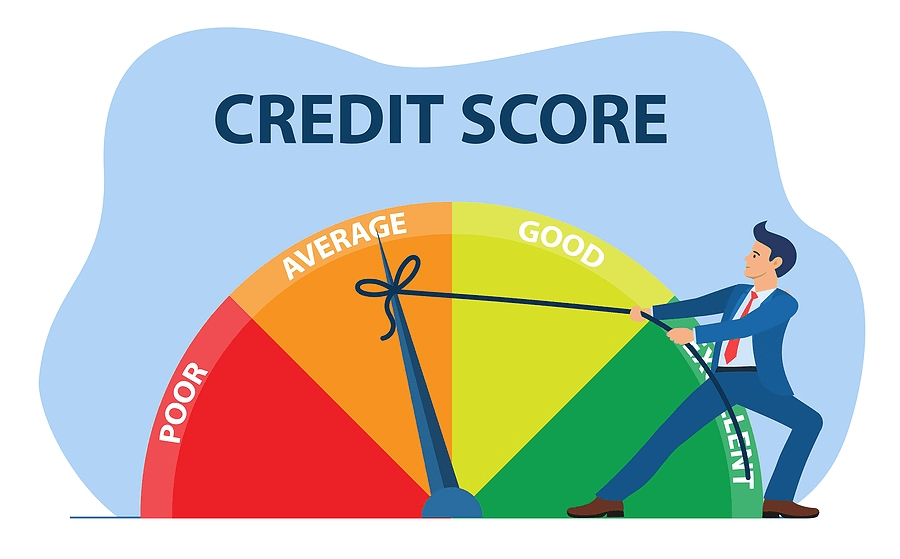
You can take out a loan for any period from 1 to 7 years, the better your credit rating, the more likely you will be accepted and the better the interest rate you will be offered. It is always best to use credit reference services to check your credit score. Many such services are free and offer deals that are soft checked against your file to give you a better idea of whether you will be accepted before you apply.

Check your credit score

I use the Credit Karma App, the Clear Score App and Experian’s free monthly service (not the expensive Credit Expert offering) and Money Supermarket. There are three main credit reference agencies in the UK, Trans Union, Equifax and Experian and it’s not unusual for them to have different data about you and different scoring mechanisms so check them all, regularly. If you have more money than sense and want to pay to see all credit reference agency scores at the same time then CheckMyFile.com offer a £14.99 per month service.

As you are paying for the full cost of the vehicle, often the monthly repayments are higher than some other forms of credit but you can purchase without having to pay a lump sum deposit and the interest rate will normally be lower than what a dealer will offer you. Interest rates are going to be rising over the next few years and car prices are going to be going up too so don’t wait for prices to fall, act now.

Hire Purchase (HP)

Hire Purchase used to be one of the most popular ways to purchase a vehicle but it’s popularity has decreased as it’s generally one of the most expensive ways to purchase a vehicle.

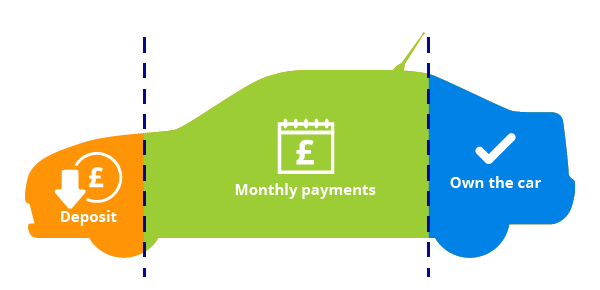
With HP, you pay a deposit towards the vehicle or trade in your old car, you pay a fixed monthly payment over a period, typically five years and then at the end of that period, and after paying a “registration fee”, the vehicle then becomes yours to do with as you will.

You cannot sell the car until you have paid off the finance. The interest rate is typically higher than a personal loan but it may be an option if you have a bad credit rating as dealerships are normally less fussy than banks about lending money. There is no mileage allowance and no penalties for damage, although that will affect the selling price after you have finished paying for the vehicle. Deposits can be quite sizable too.

I wouldn’t recommend this option unless the alternative options are not available to you.

Personal Contract Purchase (PCP)

PCP is a little bit more complicated than the other options.

Firstly you pay a deposit, then you pay a regular fixed amount over a period of your choice, typically 24 to 60 months (2-5 years). At the end of the agreement, you have the option to buy the vehicle by paying a balloon payment, or you can return the vehicle or exchange it for another vehicle.

The dealer will also give you a minimum future value figure that they believe the car will still be worth by the end of the agreement. If you buy the vehicle and the car is worth less than that minimum (based on their evaluation), they will refund the difference or put that money towards your next PCP deposit for a new car.

Lower monthly payments compared to HP or Personal Loan

Because you’re not paying the full value of the car, the monthly repayments are typically lower. You will agree to a mileage rate per year and if you have done more than the total miles agreed over the period, you will be charged an excess per mile if you return the vehicle but most people will trade in the vehicle for another shiny new car.

If you know that you will definitely want to keep the vehicle at the end of the period, PCP is the most expensive way to buy the car but if a lower monthly payment and flexibility is more important to you, PCP can be useful. You will sometimes be able to trade your vehicle in with your dealer early.

Dealers love you…

Dealers like PCP because most customers will come back and trade in their car to purchase another vehicle but it does mean you are at the mercy of their evaluations of the current value of your car unless you are willing to pay the balloon payment. The vehicle only belongs to you after paying the balloon payment.

PCP is normally only provided by dealers, so it’s harder to shop around, however you can use services like Car Wow that will pit dealers against each other to offer their best price PCP deal.

Usually, the dealer will buy back the vehicle for a figure that is greater than the balloon payment, so you will have equity that can be used as the deposit for your next PCP deal so you shouldn’t have to pay as big a deposit next time or you can still pay a deposit and the monthly payments could be lower.

Flexibility

PCP is flexible. Don’t have a big deposit? That’s ok, but the monthly payment will go up. Have a fixed monthly figure? You can increase the deposit or the dealer may make the balloon figure higher, however, the dealer needs to make sure that the balloon payment will likely be less than what they will be prepared to buy the vehicle back for at the end of the period.

It is possible for you to end up with negative equity at the end of the vehicle if the vehicle is worth less than the balloon payment so make sure you look at the difference between the balloon payment and guaranteed minimum future value and reject the deal if that minimum value is less than the balloon payment. Balloon payments are normally a significant sum of money and if you cannot afford to pay it but feel the dealer is offering you an unfair trade in price then your only option is to accept the offer or lose the vehicle for nothing.

The current state of things – everything is on fire!!!

PCP does give you an edge in the current market as residual values are high for many vehicles and there is a shortage of semiconductor supplies that modern cars rely on so it is unlikely the demand side push on prices is going to change over the medium term.

The lack of production during the COVID period, coupled with increased demand means dealers need more used cars to sell on their forecourts but there are a lack of cars coming through at the end of PCP or PCH deals meaning some dealers are offering customers the opportunity to trade their vehicles in for newer models earlier than under normal market conditions. Manufacturer discounts are disappearing but there is still some negotiating to be achieved with dealers that need cars to sell. Manufacturers are no longer allowing dealerships to buy vehicles themselves in order to meet sales bonus targets due to the general shortage so there are no pre-registered deals available, whereby new cars are discounted because you will be the second owner, not the first owner of the vehicle.

Personal Contract Hire (PCH)

With PCH you rent a new vehicle over a period between 1-4 years. When the vehicle is delivered, you pay an initial payment that is either, 3, 6, 9 or 12 times the agreed monthly payment before regular monthly payments for the duration of the term.

Like with PCP, you agree a set rate of mileage per year and if you have driven more miles when the vehicle is returned, you are charged an excess per mile. The vehicle is never yours. Some lenders will give you an option to buy the car at the end of the period but you will not know the price until the last three months of the deal and you have no guaranteed right to buy the vehicle. You must return the car in the same condition it was provided, with concessions for fair wear and tear but you may be charged for any excess damage. An assessor will inspect the vehicle with you when they pick it up.

Lowest monthly payments (typically)

The advantage of PCH is that the monthly payments are often cheaper than any other financial package. You can choose between including a maintenance package or not. Road tax is included but it’s your responsibility to service and MOT the vehicle per the manufacturers guidelines, unless you have a maintenance plan that includes this cost.

Some people don’t like leasing because you’re putting money into paying for the car but you never own it. This also means you’re not responsible for selling it and you may be able to afford a better car than you could with other finance options.

Shop around

There are a lot of leasing brokers online, and they’re very competitive. Typically they charge a fee around £300 for brokering the deal and this is paid up front but you do not pay the initial payment until the vehicle is delivered.

Mind the gap (insurance)

With all finance deals your need to remember that should the vehicle be stolen or written off, for any reason, you will still be liable to make the payments even though you have no car. If you have fully comprehensive insurance, which is an absolute must, then in the event of loss of vehicle the insurance company will pay out the current market value for the vehicle, which could be thousands of pounds less than the outstanding finance owed and you will be liable for that difference.

For this reason, it is essential that you get gap insurance to cover the gap between insurance payout and finance owed, plus your insurance excess and the cost of your next initial payment or deposit. Dealers will often offer this product to you but you will often find a better deal online. Make sure you check exactly what is covered, not all gap insurance policies are equal.

Check the cover length as well as the maximum pay out. When I took my last finance deal in 2019, I paid £214 for four years gap insurance with www.directgap.co.uk. The cover included up to £2000 deposit contribution should my vehicle be written off as well as unlimited gap protection.

What I do

This is how I obtain new cars. You do need to remember that you will need to save up for the next initial payment and also make sure that you can cover any damage penalties. PCH isn’t as flexible as PCP. If you wish to terminate early, you will be charge 50% of the remaining monthly payments.

A real world PCP versus PCH comparison

MG ZS EV

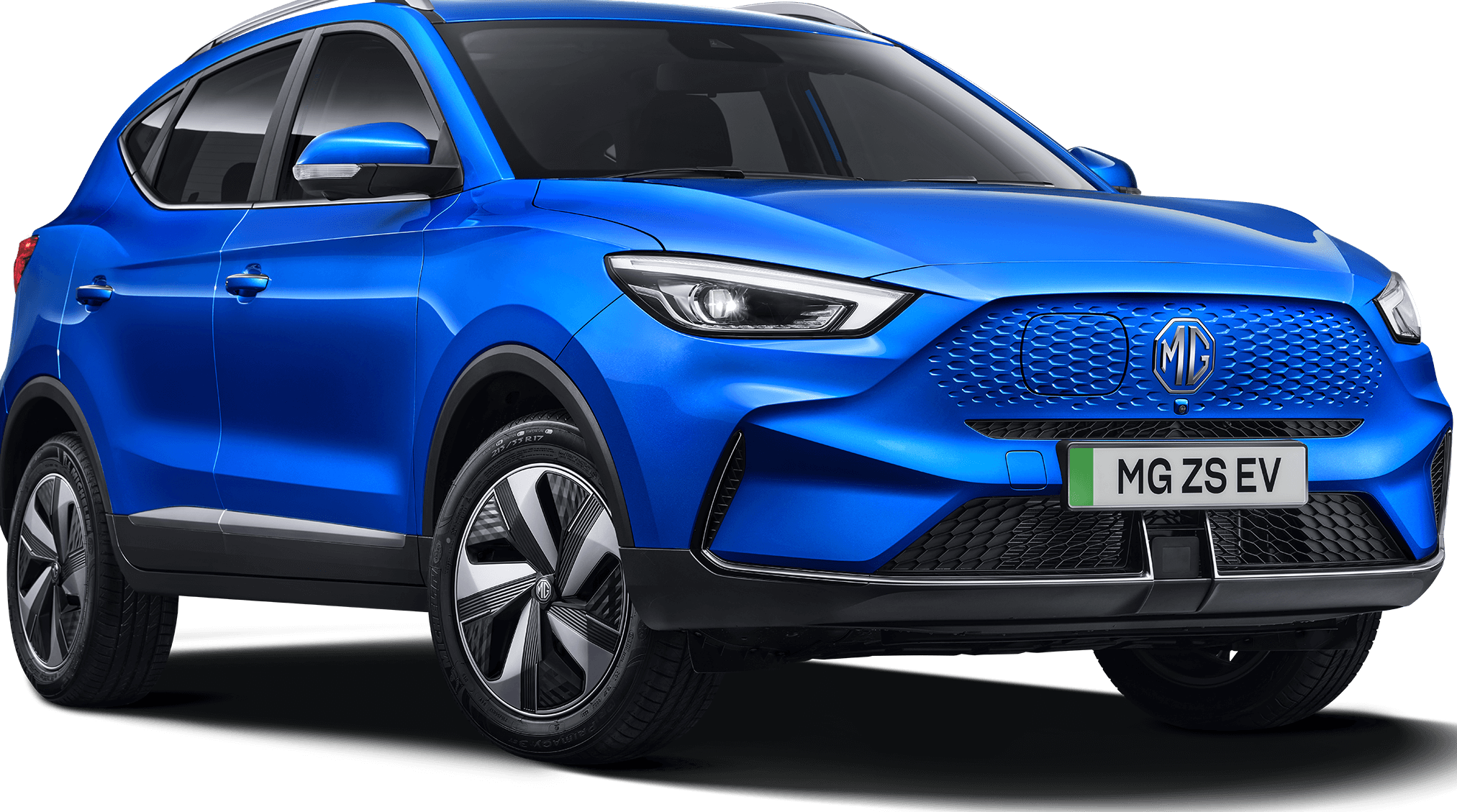
Just to give you a sense of comparison, I asked a local dealership for a PCP quote for an MG ZS EV Trophy Connect trim in Battersea Blue (the top trim) through their affinity discount scheme. The list price of the vehicle is £32,540.00 and I asked for a 4 year deal with a £3200 deposit and mileage allowance of 8000 miles per year. The dealer price was £412.08 per month.

Online I was able to find the same vehicle on a 9 month initial payment (£2,698.92), 4 year deal with the same 8000 mileage allowance for the price of £299.88 per month, making the total cost including a £360.00 admin fee £17,453.16 compared with £22,979.84 for the PCP offer. That’s a saving of £5,526.68 over the length of the deal.

The difference in cost over that period, would be enough to pay the same initial payment on the vehicle twice over, but I would have no equity to use towards the next deal. The balloon payment would have been £12,456.00.

Be flexible, friend

Lease prices change very quickly. The best way to get a great deal is to be flexible in terms of colours and not expect any excess. Fleets buy large number of vehicles in order to get big discounts with manufacturers but as the vehicles are often from stock rather than factory orders, numbers are limited. Always shop around and compare prices. Beware extremely low mileage deals as if your go over the agreed mileage the additional charge can soon add up.

The deal I mentioned with the MG ZS on PCH is no longer available and the new price at the time of writing is £424.08, which makes it more expensive than the PCP deal. This is why shopping around is so important. Get as many quotes as you can, you’re not duty bound to accept any of them.

Timing is everything

I happen to know that a new version of the ZS EV is due to start production in October so the price I found was likely to be an attempt to make way for the new model. Sometimes when you buy is important. Car registration plates change in March and September so late February and August used to be a good time to aim for before the supply issue forced prices up.

Anytime a new model is due to be released, the older versions are normally discounted so search owners forums and press releases for this kind of information. Knowledge is power. Dealers hate it when a customer comes in with all the information already at hand. Believe it or not, sometimes dealers are the last to know about these things.

Appreciating depreciation

According to https://www.omnicalculator.com/finance/car-depreciation, assuming average depreciation in value, the vehicle would be worth £15,912.06 after four years, leaving equity of £3,456.06 towards the next vehicle so in this case, it looks like the lease would still be the cheaper option but that won’t always be the case and it is likely that a used EV under current market conditions will fare much better than average depreciation.

That is the fun with PCP, you need to be a fortune teller to guess what that buy back price will be and because you cannot sell the car unless you pay the balloon payment, you’re at the mercy of the dealership when it comes to buy back price. The better condition you keep the car in, the higher that future price will be so although in practice there are no damage penalties, in reality making good any damage will be factored into the price.

I am not loyal to any one brand of vehicle or dealership, I like to try different cars so for me, leasing keeps all my options open without having to obtain some sort of bridging loan to pay the balloon payment and then having the hassle of selling the vehicle privately but that’s just me. Your circumstances may be different. The most important thing to take from this is to do your own research. Don’t allow the dealer to confuse you with numbers. Don’t rush into an agreement immediately after viewing a car and falling in love.

Thanks for reading

I hope you have found this guide useful and informative. All information

In my next article, I will explain how I approach the whole process of obtaining my next car but I hope you have found this piece informative and useful.

EVs are not a solution to climate change

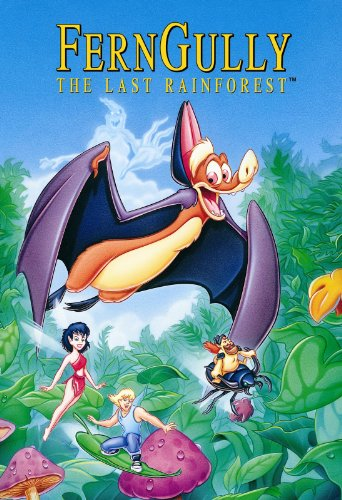
Back in the 1990s every child in Britain learned about environmental issues such as the hole in the ozone layer and deforestation of the Amazon rainforest through TV shows like Blue Peter and films like FernGully.

Ironically, the rise in the use of plastic bags was partially the result of an attempt to reduce the rate of deforestation but in life there are no free lunches, every decision we make has it’s consequences, such as the rise of plastic pollution in the worlds oceans.

That doesn’t mean that we shouldn’t try to reduce our impact on the planet, but it does mean we should carefully analyse our political decisions to find the best balance, understanding that there are no magic bullets, we cannot eat our cake without the calories and we cannot enjoy modern transportation without an ecological impact on the planet.

Back to the future

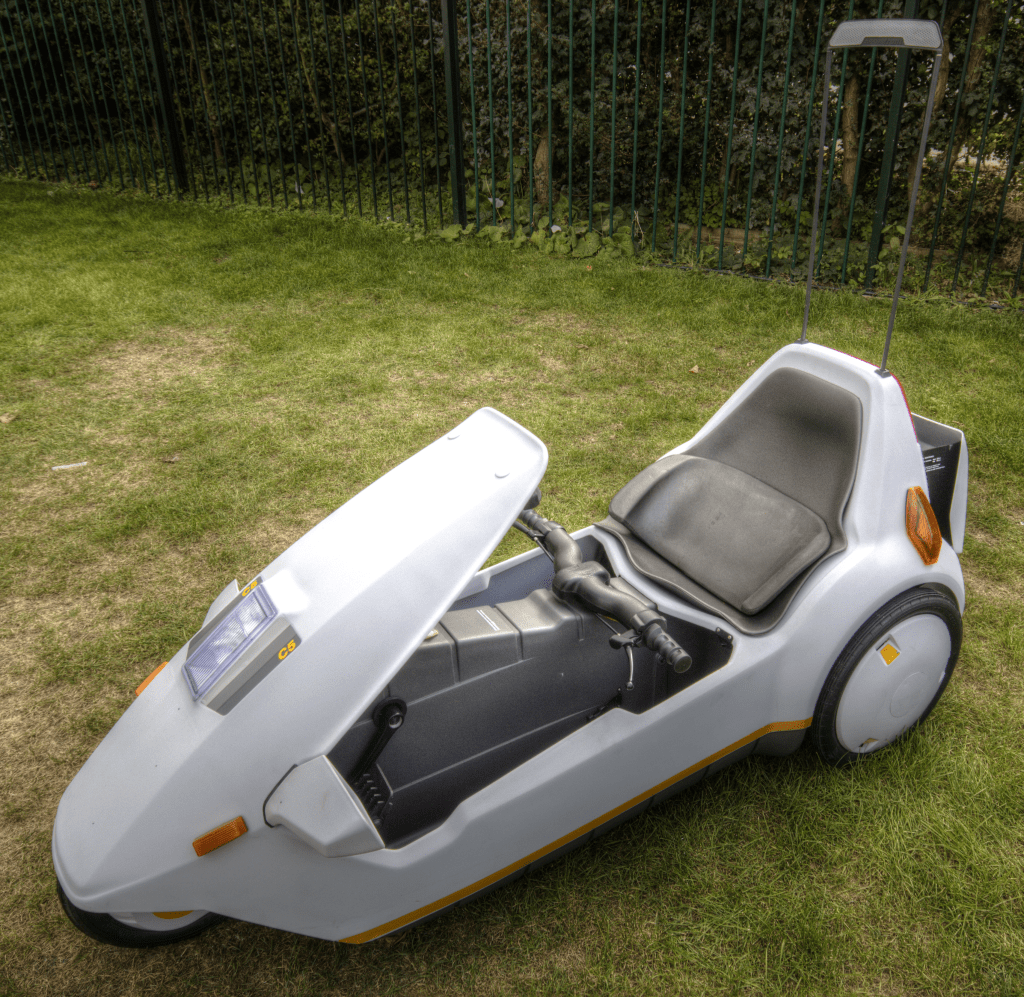
A Sinclair C5, EV 1983 style

Electric Vehicles are not a new idea. The Sinclair C5 was released in 1983 and milk bottles were commonly delivered in recyclable glass bottles by electric floats until supermarkets pushed the prices down in 4 pint plastic containers. Of course, the acid batteries powering those vehicles is much less efficient than the state of the art lithium ion battery packs we see today.

Beyond that, the Toyota Prius hybrid became very popular with high earning individuals that wanted to signal their commitment to the environment but didn’t want to swap the daily school run for a school walk in western suburbia.

Today, we even have categories of motor racing using purely electric cars and we can thank formula one for the technology of reclaiming energy whilst decelerating that exists on every vehicle powered by a battery array.

No ICE, ICE, maybe?

We’ve now reached the point where governments around the world now have policies mandating the cessation of the Internal Combustion Engine (ICE) in favour of electric motors, driven, allegedly, by the “climate emergency” facing our planet as carbon dioxide emissions, you know, the gas that plants photosynthesise and turn into oxygen, levels rise.

It reminds me of when the government started encouraging people to buy diesels. They produced less C02, they said. They get better MPG, they said. Then they discovered carbon monoxide and suddenly Diesels were evil and needed additional taxation, because “give us more money” always fixes pollution, right?

I’m not going to get into the science behind climate change here. That deserves it’s own thorough analysis, however, supposing we accept the narrative that carbon dioxide is solely responsible for the changing weather patterns of our planet, is mandating the rise of EVs the right solution? I will argue that it is not.

Hold those pitchforks, Elon fans

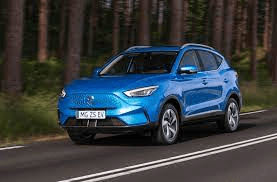
MG ZS EV

Before you grab your electric pitchforks, firstly let me explain that I have nothing against electric vehicles per se. In fact, I recently test drove an MG ZS EV and I loved it. There are a lot of positive things to be said about EVs, so lets start there first.

If you live in a smog engulfed city like Beijing where lots of kids are growing up with breathing issues like asthma and allergies, there is every reason to love the idea of taking all those nasty pollutants coming from the exhaust of hydrocarbon burning engines and making them disappear somewhere else. Modern catalytic converters with particulate filters do a great job of cleaning out the vaporised dinosaurs from our air, but zero emissions has to be better than some.

Electric vehicles are fun to drive and they perform better in urban environments with slow moving, start stop traffic than they perform at higher speeds, which makes them the opposite of a diesel vehicle. Guess what, most journeys these days are exactly those kind of short urban commutes, with the exception of the haulage industry.

Electricity is cheaper than regular fuel, in part because of the combination of fuel duty and VAT on petrol and diesel so the running costs can be much lower. Less moving parts means less things to go wrong in theory. The physical brakes get less wear too due to the kinetic energy reclaim braking system.

Even the downsides of a lower range can be a positive as people drive more frugally to eek out as much range as possible out of that battery, 60 mph becomes the new 70 mph, and with less concertina traffic jams, maybe our highways stay a little less clogged?

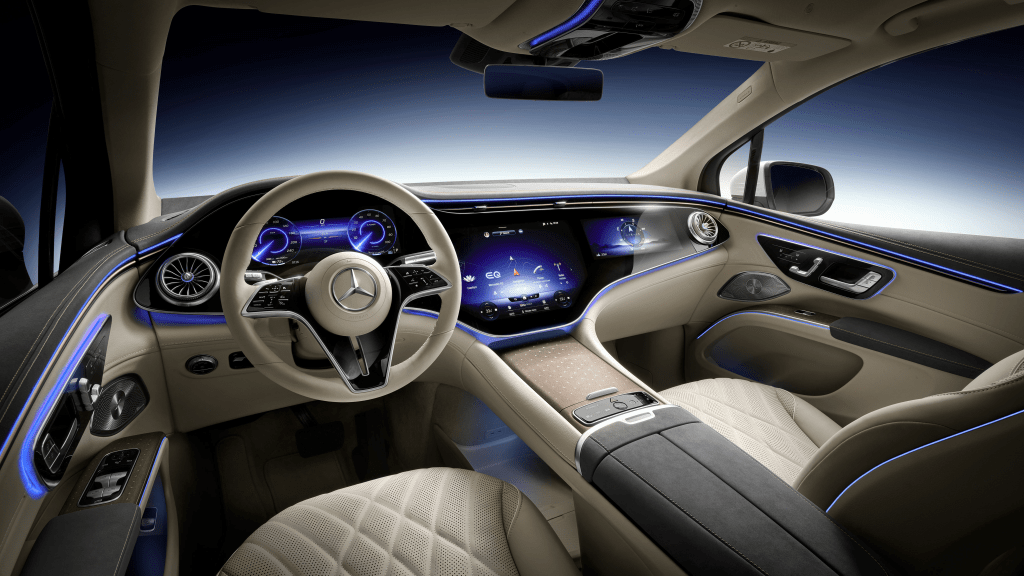
My next vehicle is going to be a hybrid and after that, I would happily take a fully electric vehicle. When it comes to driving, I’m more of a geek than a petrol head. I’m less fussed about 0-60 and more interested in how much technology I can get for my money. If anyone wants to buy me a new Mercedes EQS, I’ll love you forever.

My dream machine, a Mercedes EQS. Price starts at £100k. Yes, that wasn’t a typo, £100k

My criticism is more to do with the policy of banning ICEs and selling the message that this is a move to save the planet. Unless your planet is a car manufacturing plant, that’s a little bit of a stretch to say the least.

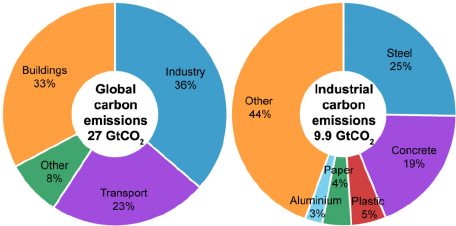
Where do C02 emissions come from

https://www.researchgate.net/figure/Global-emissions-of-carbon-dioxide-a-by-major-sector-and-b-within-industry_fig1_242582149

As you can see from the graph above, only 23% of the worlds carbon dioxide emissions come from transport, and that’s all transport including aviation and haulage, 36% comes from industry.

No, not this kind of coke

You will probably say yes, but we need to make any reductions we can across the board but here’s the thing, to replace all the ICE vehicles in the world, you’re going to need a lot more “gigafactories”, producing all the sub-components to make these new vehicles. You’re going to need a lot more aluminium, a lot more carbon fibre, a lot more lithium, cobalt and nickel, the three major components that make up lithium ion batteries and you’re also going to need a lot more coke, a bi-product of the crude oil distillation process that is used to make the anodes of car batteries.

Cash in the catalytic?

Car manufacturers be like…

I can see how creating this surge in demand for new vehicles is a great for boosting the economy and creating manufacturing jobs. If you are a manufacturer in the automotive industry, it’s great news but is it great news for the environment? Surely it would be better to take the make do and mend approach and keep older vehicles running as long as possible, reducing the need for new vehicles rather than this “enforced obsolescence” strategy we’re seeing governments take up now?

You will probably tell me that we can just get more efficient at recycling. We won’t need as much new material as we think once the switch over has settled down and old batteries will be recycled into new ones, and that’s certainly a possibility long term. I think we need to get smarter at recycling regardless of the EV question.

You could also point out that the new policies aren’t banning ICE vehicles, they’re only stopping more ICEs being made, second hand ICEs will continue to be available and will slowly disappear like other outdated technologies such as VHS, Compact Discs and even DVDs these days. I think that’s a fair point, however, we have seen the government use the carrot with special incentives to encourage people to swap their ICE for an electric motor but after the carrot comes the stick.

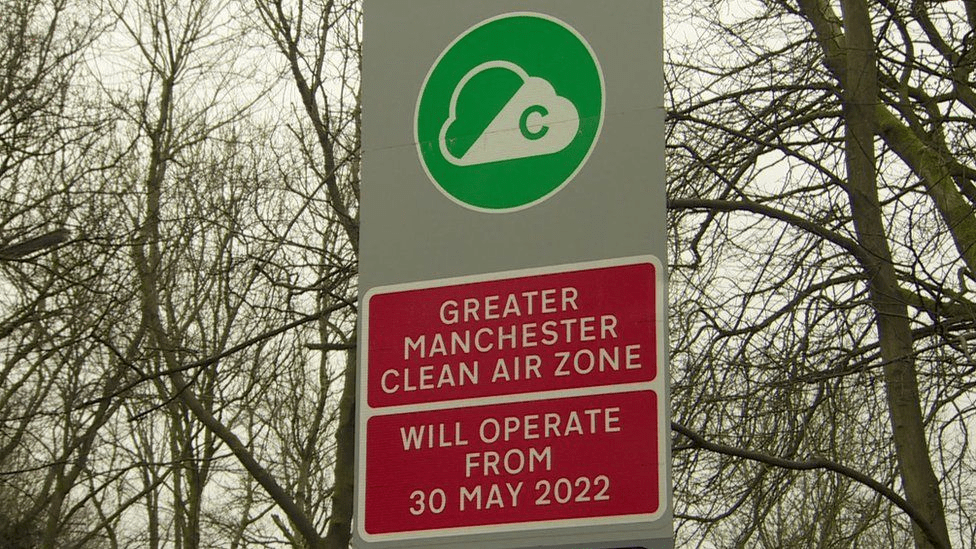
Cashing In, the Manchester Clean Cash, I mean Air, scheme

In my fair city, the council has been toying with the idea of “low emission” zones and other cities already have them in place. Today they penalise mainly business users with older engines, but once the general public have gotten used to those charges, I have no doubt that it will be extended to all passenger vehicles with combustion engine. The government is artificially manipulating markets to suit its political agenda. This isn’t new and it’s not always a bad thing, but in this case I believe the motive is at best misplaced, or at worse, a deliberate profiteering ploy.

If your motivations for “going electric” are to save money, taking advantage of government inducements such as subsidised vehicles (about to be discontinued), subsidised home charging point installation (now only for flats), free charge points facilities (most now charge), cheaper car tax (for now), and swerving the cost of fuel including the large percentage that is made up of taxation, then I don’t blame you but understand that these carrots are short term. The stick is coming…

Death and taxes

Do you really think that once the critical mass of vehicles on our roads are EVs, the government is going to accept the loss of revenue from fuel taxation or do you think they’re going to replace it with some form of per mile taxation? The old adage of death and taxes spring to mind, you can swerve them for a time but the grim reaper and the jolly taxman will both get you in the end!

Robin Hood in reverse, and I don’t mean dooH niboR

Personally, I don’t think incentivising the purchase of new electric vehicles was ever good use of public funds. Who buys new vehicles? You have to have significant fund to buy a new vehicle, so subsidising new vehicle sales is taking money from the general populous and giving it to those whom need it the least. There’s no incentive scheme for people buying second hand EVs.

I know what you’re thinking, if there aren’t enough people buying new EVs that there won’t be enough second hand vehicles on the market for used buyers, that is true, in fact, I will right a separate piece about the current state of the whole motor vehicle market. However, it still doesn’t sit right with me that taxpayers money should be used to advantage relatively well off people when it could be targeted at reducing inequality by promoting social mobility through education and training.

Where does electricity come from?

We live in a very sophisticated society where we turn the tap, and we know that fresh, clean water will come flowing out. We flush the toilet or put our bins out and we have no idea what happens to our waste products. We go to the supermarket and buy bits of animal or vegetation in shrink wrapped packaging and we have no idea what happened to get that product to our plates. We flick a switch and glowing light magically appears in our houses without the need for the sun or burning something.

In other words, we are completely disconnected to how all this stuff we depend on actually works. We are told that we can just switch to electric vehicles guilt free, knowing we’re not burning any of those horrible grumpy dinosaur juices we call fossil fuels, but where is that electricity really coming from?

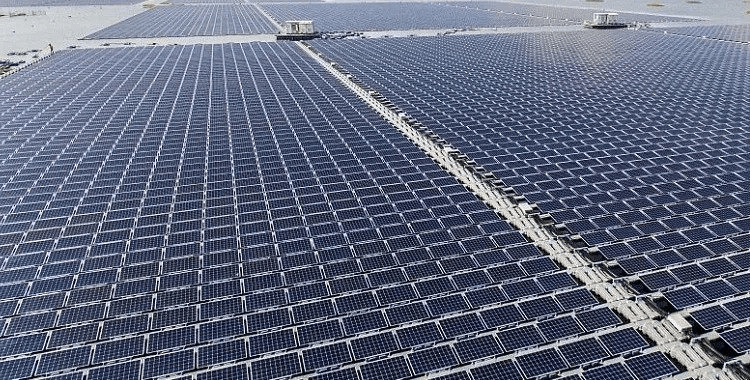
Is it from those lovely off-shore windfarms, at the end of a rainbow? Is it from those nice shiny solar panels that bring back memories of old calculators? Again, I have nothing against wind and solar energy but, just like with the plastic bags, we need to understand the ecological impacts.

These structures do not last forever and in the case of photovoltaic cells, they can be really difficult to recycle. In fact, there are areas of dessert filled with buried panels. Does this remind you of the plastic straws thing? It does to me. Ok, maybe that’s just a technology issue and over time we will get better at it. Solar cells made today are a lot more efficient and last longer than those made even 10 years ago, so lets hope that this evolution continues in the same way that ICEs continued to get more efficient and less pollutant, or at least the engineers worked out how to cheat the tests to make them look less polluting, cough, cough, VW Group.

Turbine Tomb

However, wind farms are not without issue. We do not know what the long term impact is on marine life for off-shore windfarms or in deed migratory birds. If you’ve ever looked out to a wind farm at night you may have noticed that not all of them are turning even when it is sufficiently windy. This is partially because the turbines are sometimes arranged at different angles to optimise for different prevailing winds, partially due to maintenance being required and also partially because believe it or not, the turbines have operational ranges and sometimes won’t operate if the wind is going to cause damage to the electric motor.

Solar has similar issues. Solar farms require a lot of land (unless they’re the at sea floating ones). For them to operate efficiently, all vegetation and wildlife needs to be cleared unless you happen to have a convenient dessert to use. They need to be kept clean, which means lots of water use too. Unless you’re building them at the equator, which has been tried but is politically difficult, then you have limited hours of daylight to generate energy from.

People would get very upset if you told them that the light will come on, but only when the sun is shining or the wind is blowing. Does this mean we shouldn’t use these forms of “greener” energy? Of course not, but our grid needs to scale to meet increases in demand or periods where green generation was not possible.

Is the tide about to turn?

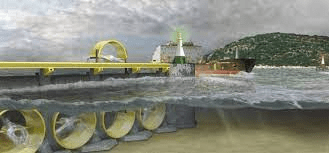
To be honest, it surprises me, particularly as an island nation, how little we have invested into tidal energy. Unlike the wind or sunshine, the gravitational pull from the moon on our oceans is constant. This has the best potential for green energy for us. We are not Iceland, we don’t have the advantage of geysers to generate power but we do have a lot of coastline. There’s still no free lunch, there are ecological impacts with marine life being sucked into turbines but there’s only one site in wales that I’m aware of that uses tidal power.

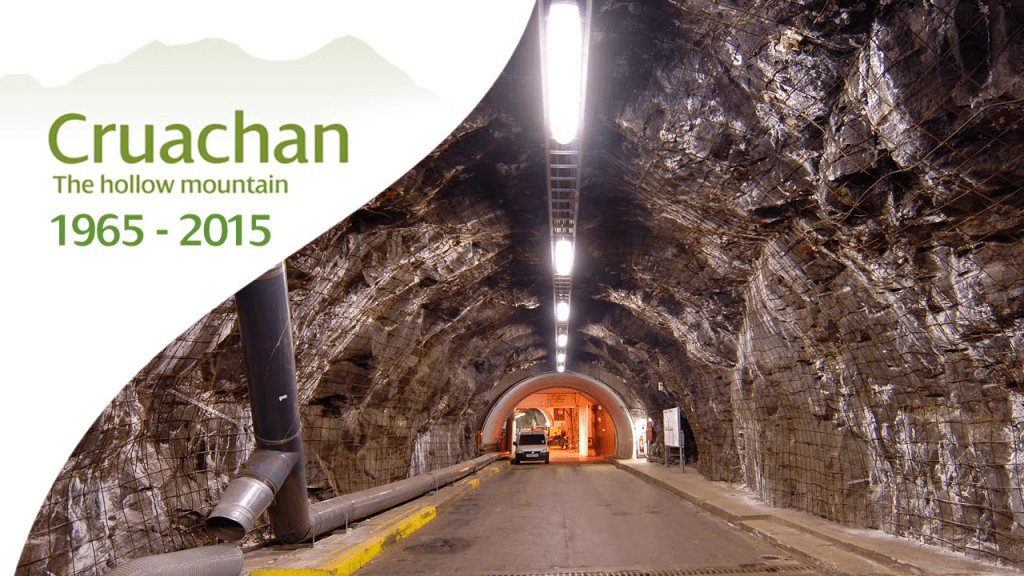
Hydro power is a good option for energy storage too. The problem with green energy isn’t just that you can’t crank it up when you need more power, sometimes it produces energy when you don’t need it. Hydro power plants like Cruachan in Scotland pump water from a loch up a mountain when excess energy is available then when demand is high, the energy is released through tunnels in the mountain, allowing gravity to turn turbines at the bottom of the mountain to generate energy. This is the closest we have to energy storage. It’s great, but once the reservoir at the top of the mountain is empty, there’s no more power until more water is pumped back up.

A power struggle?

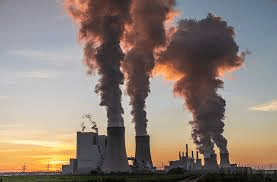
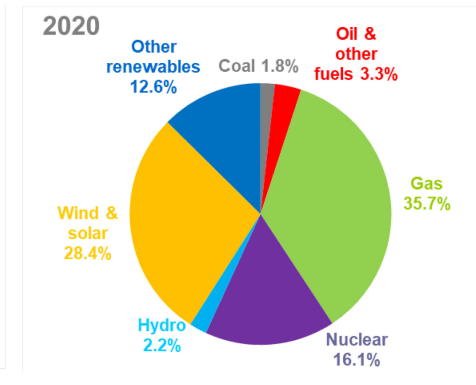
The reality is that in 2020, 56.9% of our energy was produced from non-renewable sources. Given that the demand for energy would increase significantly, particularly at night when solar energy is offline if we replaced all our ICEs with EVs, even with significant investment, we are going to actually end up increasing the rate at which we burn fossil fuels to generate that additional supply or alternatively, we are going to need to build more nuclear power plants.

I have absolutely no issue with increasing nuclear power capacity. It’s actually one of the cleanest and greenest sources of energy at our disposal and there is the prospect of improvement with Oxford scientists making breakthroughs in terms of nuclear fusion that could one day lead incredibly efficient power generation. In the meantime, we could invest in thorium reactors which use reprocessed nuclear fuel, i.e. waste products from existing power stations and decommissioned nuclear weapons. Unfortunately, groups like greenpeace do not like the idea of nuclear power, which leaves us only with burning hydrocarbons to fill the void.

By the way, that 12.6% other renewables is mostly bio-mass, i.e. burning your waste. It’s renewable but it produces the same kind of carbon emissions as burning dinosaurs. There are no free lunches. The emissions of power stations may be out of sight, out of mind, but that electricity that powers EVs is not coming from fluffy clouds and unicorns.

By the way, if you would like real time data on UK energy production, the Grid Watch website is an excellent source.

Don’t forget the batteries?

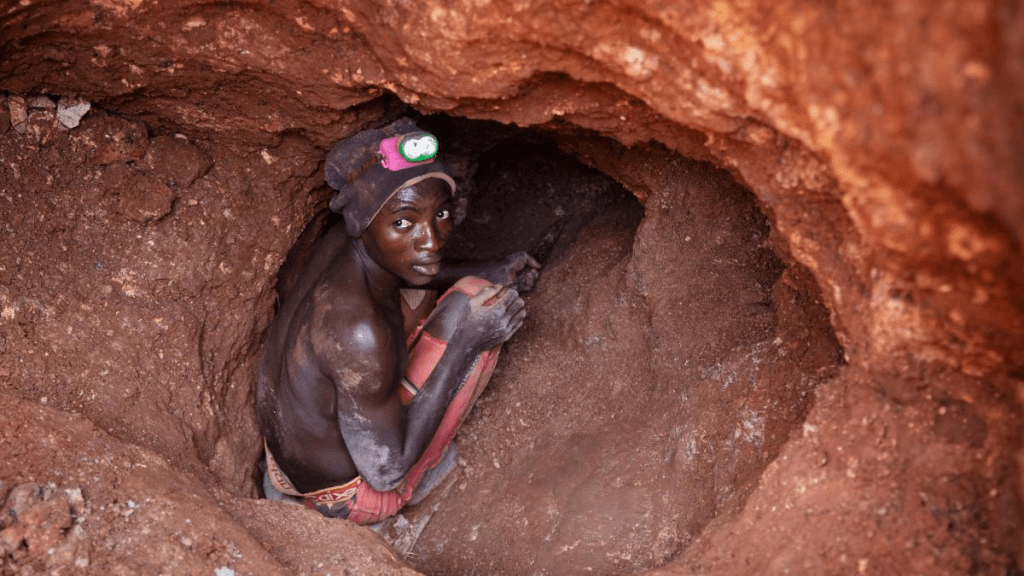
That EV is mine. The human cost of lithium batteries

I’ve already mentioned the finite natural resources needed to produce the lithium ion batteries used by today’s electric vehicles but another issue is weight.

When considering an energy source to propel a vehicle, there are three main considerations you need to factor in. Firstly, how much energy can you get out of that source. Secondly, how stable is that energy source. Thirdly, how much does is weigh. How much does it cost to produce and finally, are there any operating restrictions to its use. The most efficient fuels are a combination of these factors and it turns out that petroleum, diesel and kerosene were an excellent choice.

Nuclear car anyone?

If you want maximum energy density, nothing beats Uranium-235 with an energy density of 3,900,000 Mega Joules per Kilogram (MJ/Kg). By contrast petroleum is only 46 MJ/Kg. However, you probably wouldn’t want to be involved in a car accident with a nuclear power reactor in your vehicle. It’s great for submarines, especially the lack of dependency on oxygen for the reaction, but not vehicles.

Selling the Fuel Cell

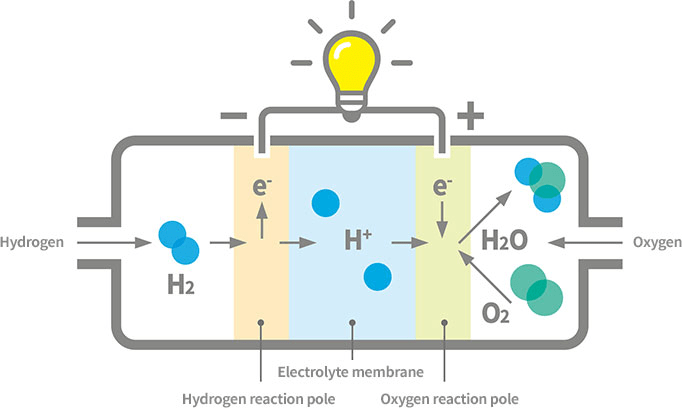
The next best option is hydrogen. Hydrogen is the most abundant molecule on the planet, it has an energy density of up to 141.86 MJ/Kg, but there are just three slight problems. The first is that in can explode even without exposure to oxygen, it’s very volatile hence the Hindenberg disaster. The second is to get decent energy density, it needs to be stored at high pressure and that requires heavy tanks. The third is that despite being abundant, hydrogen atoms are very excitable and like to share electrons with other atoms, such as water (H2O).

It actually takes a lot of energy to separate into a useable fuel. Most hydrogen fuel produced today is called grey hydrogen, i.e. it requires fossil fuels to produce it. If you have surplus renewable energy, you can produce green hydrogen but it’s still expensive as a fuel although the airline industry are considering it as a long term successor to kerosene.

The advantage of kerosene over diesel and petroleum is it’s high freezing point. When you’re flying at 40,000ft, the outside temperature can be as low as -75°C. You don’t want the fuel to freeze or become waxy. Due to the weight of the tanks required to store hydrogen, planes would need to be completely redesigned with delta style wings to cope with the added weight and volume of fuel required to achieve acceptable ranges.

Dirty dinosaurs, dense but delightful

You may be thinking how can petroleum and diesel be ideal fuels when the energy density is so low, but it’s stable, it has reasonable operational tolerances and it’s easy to transport. How does it compare to a lithium battery. Well, lithium ion batteries have an MJ/Kg energy density of between 0.36–0.875. Now you can see why they’re not very efficient.

The density is so low because of the weight. Let’s do a quick example. I recently test drove an MG ZS EV, which is also available as a petrol car. The petrol car has to include the weight of the engine, the exhaust system and all the other moving parts that an electric motor doesn’t need yet still, the heaviest automatic MG ZS weights 1730 Kg. What does the same vehicle with batteries and a motor weigh? 2060 Kg for the standard range option. The range of the EV is 198 miles with it’s 51 KWh battery compared to 388 miles (7.2 litre/100k with 45l tank = 625 Km or 388 miles).

You may say but those are WLTP figures, in real driving conditions you’re not going to get that many miles per tank and you are correct. However, the same is true of the electric range.

Another factor to consider is that if you drive a ICE vehicle with half a tank, it reduces the weight of the fuel, improving the range but an EV with 20% range weighs the same as an EV with 100% range. Both vehicles suffer degradation over age. An EV loses about 5% of capacity after about 7 years on average. It also loses range in cold weather and doesn’t perform well with extreme temperatures. Diesel expands in hot weather due to the additives and the engine will perform less efficiently over time.

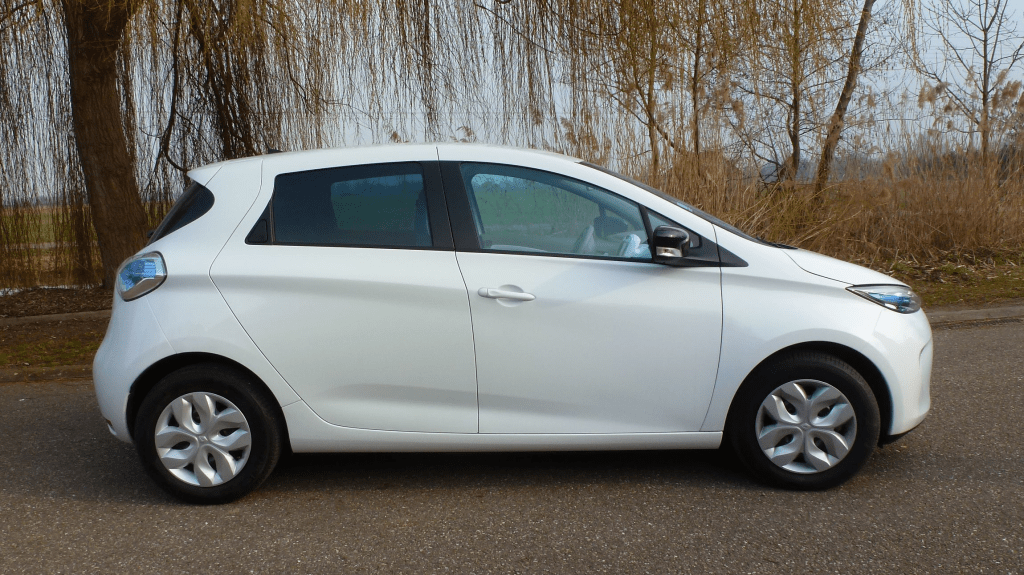
A Renault Zoe EV

However, if you’re in a budget EV like a Renault Zoe with a 22KWh battery, you’re only starting with a maximum range of 150 miles to begin with. Range anxiety is an issue with EVs. The main problem is not the range but the fact that it can take one hour to charge to 80% at a 22 Kw charging station as opposed to the 5 minutes it might take to fill up a tank of fuel.

Again, you may think I’m being unfair here picking on the bargain basement original Zoe, it has improved since and you may point to the range and charging times of a Tesla but a Tesla Model 3 costs nearly £50,000 new. How many people are going to be driving cheap second hand Zoe’s or Leafs compare to the numbers driving Teslas?

Won’t someone please think about the poor motorists

If the fallaciousness of the environmental credentials of EVs is my primary concern, my second concern is the effect such policies will have on low income drivers. The stunted availability of supply in the second hand market is going to keep prices high so there will be fewer cheap run arounds available for people like carers and delivery drivers in the gig economy that need a vehicle to work but cannot afford more expensive electric vehicles, even if they have lower running costs.

Many motorists will be pushed out of the market all together and yes, you can argue that this is a good thing for the environment. Fewer drivers, fewer cars, greater uptake of public transport but how is that going to affect low paid carers that can’t get from one client to the next in a reasonable amount of time via public transport. You could argue the answer to that is better public transport, and I am conducive to that line of reasoning but I can see EVs and the cost of motoring in general becoming an indicator of relative poverty.

You may also argue that the answer is to pay better wages, but that means employers passing on those additional costs to their customers or employing fewer people to do the same work. Do we want to live with higher unemployment? Do we want small businesses that can’t absorb the additional costs to fail? Do we want a never ending cycle of increasing inflation until we reach a point where all faith is lost in the value of our currencies?

In the style of yoda, deep, the rabbit hole is.

If not EVs then what?

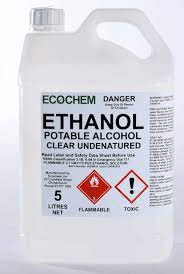
They said that alcohol is never the answer, turns out they were wrong

It’s very easy to criticise government policies like a heckler at a comedy gig, but it’s a lot harder to stand up and take the mic, or in this case, come up with a better policy for reducing the impact of carbon emissions from private motor vehicles without screwing over the poor, but one possible alternative is already out there.

It doesn’t involve replacing ICE vehicles with new, shiny but less efficient EVs. Not that I want to get rid of the EV market. It should continue to be an option for those that want them and in an environment where EVs and ICEs compete on the same terms, it encourages competition that might help lower the cost of EVs, which would be good for those of us that want them.

May I introduce to you, bio-ethanol. Actually, you’re already acquainted. Regular petrol sold at UK pumps mixed with five percent ethanol, with plans to increase to 10% soon. Ethanol has an energy density of 30 MJ/Kg, so it’s not as good as petrol but it is renewable and ethanol is produced from plants. Plants absorb as much carbon dioxide as burning ethanol so it is essentially carbon neutral and produces between 40% and 108% less green house gases depending on its source compared to fossil fuels. It’s cheap to produce and existing vehicles can be converted fairly cheaply to run on pure bio-ethanol. It needs upgraded to certain rubber hoses used as it’s more corrosive than standard petrol but compare the cost to the environment of brand new EV vs, replacing a few bits of rubber. You don’t have to be Einstein to work out it makes more sense, but less money for car manufacturers.

So what is the catch? Ok, so MPG figures are not quite as good, it’s low emission but not zero emission and it has been criticised because to make the fuel you need arable land to grow the crops, which means it could be competing with food production for land. If only there was some kind of plant that was massively abundant that could be converted to bio-ethanol without using up all that land, that would be a pretty neat solution, wouldn’t it. What, you can make bio-ethanol from algae, one of the most abundant plants on the planet?

A genuinely green fuel

“Algae in the oceans, rivers, and lakes of the world are thought to produce about half of all the oxygen produced on the planet. Those of us who appreciate breathing should offer the algae our thanks. Given that the total biomass of the world’s algae is but a tenth of the biomass of all the other plants” – https://link.springer.com/article/10.1007/s11027-010-9255-9

Countries like Brazil are already switching from dinosaur juice to sugar alcohol, so why the insistence on EVs and only EVs for a more sustainable future with lower emissions? What has happened to allowing customers choice and to decided for themselves without political interference? Maybe battery technology will improve so much in the next 20 years that EVs eventually win the day and ICEs are consigned to the history books, like beta max, and if that happens for the right reasons then I will drive my future electric car, and I will love it, but until that day, governments should not be destroying competition in the market by declaring a winner before the first round has even started. I think they’re backing the wrong horse. If graphene batteries come into fruition and drastically change those energy density calculations, and if nuclear fusion becomes viable, sure, EVs would undoubtable become the king of the concrete jungle, but to gamble on that now, before the technology exists is one hell of a risk

Unless you happen to be China, the country that singlehandedly produces the most carbon dioxide emissions in the world (29.18%), and also one of the largest lithium ion battery producers in the world. It makes great economic sense for China.

Says the man who nearly picked a Chinese EV for his next vehicle. I’m also quite partial to the odd prawn cracker too!

Return to the 1950s: That’ll be the day

There is an old adage that “History is written by the victors” but it’s more accurate to say that history is rewritten with each time the story is retold, just like a game of Chinese whispers, only with each telling morphed to suit the cognitive bias of the story teller.

You have to be careful when discussing previous eras not to lean too heavily on your modern perspective as in doing so, you risk completely misunderstanding the people, and events of the past.

No more obvious has this become than in the Information age. For the last decade or so, humans have been able to communicate faster and to a far greater audience than ever before. It’s difficult to even accurately analyse the electronic word even in the moment, never mind in the annals of time.

The rate of change in acceptable societal discourse and belief is changing at the rate of knots, the Overton Window narrows by the minute. People whose opinions would have been considered left of centre merely a couple of years ago are now considered not just right, but outside of acceptability. Take a look at the positions of someone like Hillary Clinton, for example, whom not so long ago was against gay marriage and illegal immigration and has since flipped 180 degrees but, if you’re being charitable, has adapted for a modern audience.

I pick on Hillary here, but she is in no way unique amongst the political classes and I do not think it is a bad thing for peoples opinions to change over time, although with most politicians it appears they will say whatever is expedient at the time, rather than having genuine changes of heart.

Sportsmen and women are being vilified for comments that they may have made on platforms like Twitter when Twitter was a niche environment, a decade beforehand. The comments are often isolated from the context and intent of their younger selves, but they are no less forced to apologise for something that may have seemed perfectly reasonable at the time. I see myself as being lucky to have grown up before this technology evolved. I think if millennials and their precursor generations are being honest with themselves, I don’t think there is a single person that would pass the purity testing that we now have.

If our perceptions and views of the world have changed so dramatically just in the last 10 years alone, just think how much more different our ideas are now compared with the average 1950s family.

If you deviate, even slightly, from the current cultural positions on sex politics, it’s not uncommon to come across slurs such as “you’re living in the 1950s”, as if the maxim is valid in-situ for actual counter evidence to biological facts.

This stimulates me because of the fragrant mischaracterisation of the period by generations that have no genuine understanding of life in the 1950s. The typical conception is that the period was a miserable time for women. That sex roles were austere and that only the work of brave feminists from the 1970s emancipated women from what was claimed to be an oppressive state.

I do not believe that this interpretation would be recognisable for a lot of those that came of age in this era and in the rest of this article I will explain why.

That is not to say that there isn’t a modicum of truth to the position. To understand the 1950s, you really have to understand what came before. It is certainly true that sex roles were more restrictive than they are today, and it’s also true that the early 1950s had an air of austerity, turning to prosperity and growth and the decade proceeded.

In Britain, for which I will lean on heavily for my analysis, food rationing was still in place until 1954. 383,700 British military personnel died in the Second World War from 1939 – 1945, 450,900 if you include civilians too. To put that into context, the male population in 1939 was estimated at 22,099,700 so the loss was in the region of 2% of the male population. Compare that to the rate of deaths from covid of 0.245 (population 68,393,741, covid deaths 167,927 at time of writing).

When you factor in the impact of those fortunate enough to survive military service, and the injuries both physical and psychological, it is easy to understand why many view the period as somewhat grim, but this does not tell the full story.

In 1948, the National Health Service was formed, making free at the point of use Healthcare available to all UK citizens for the first time. We take it for granted now but at the time it was a radical proposal. Not only did it provide healthcare for the sick, including maternity services that have led to huge declines in child mortality, it also became one of the countries largest employers, employing an estimated 68,000 nurses and 11,700 doctors at the start.

The notion that women were confined to the kitchen sink is simply not true. In fact, there was such a shortage of workers in the UK that men and women from the commonwealth were invited to the UK en-masse. This was the windrush generation.

Elsewhere, old Victorian slums were being cleared and entire new cities were being built at pace. This process started after The Great War and continued following the Nazi bombardment from the Second World War. Indoor toilets, electricity, hot running water were becoming the norm for the first time and also more affordable for average working class families than at any time prior or since.

When people say that “you want things to go back to the 1950s”, to be honest, if I compare the affordability and quality of housing stock from this period to the crisis we have now, whereby even professional workers are unable to afford to live in a growing number of cities, it’s difficult to see this as a negative proposition.

The 1950s was perhaps the birth period of the teenager. Go back to the Industrial Revolution in Northern working class homes and what you will find is children having to work, either down mines, in factories with little health and safety or as chimney sweeps. Child mortality rates were high, disease was rife, abject poverty was the norm. Every member of the typical working class family had to work. We only stopped sending women and children down the mines in 1842 due to the number of accidents. The accidents continued, but somehow more acceptable when the losses were adult males. There was, however, a certain but limited amount of sympathy for the widows left behind.

The periods where a married man’s income alone was enough to purchase acceptable housing and a wife was free to concentrate on children and domestic duties (1930s and 1950s-1980s) were not oppressive at all, it was liberation from a hand to mouth existence. This was the halcyon period for the middles classes

The high employment rates of the 1950s and technological advances vastly reduced the amount of time common chores took. Imagine what life would have been like without refrigerators (1940s), gas ovens (1920s), vacuum cleaners (1930s), automatic washing machines (1930s), lightbulbs (1809), running water (1930s), central heating (1930s), televisions (1928), telephones (1876).

I alluded to the birth period of the teenager. 1950s teenagers actually had disposable income and there were new exciting venues such as record shops, ice cream parlours, discos, cinemas. Compare the freedom 1950s teen had to teens now and you will see that it was a time of great opportunities and little parental supervision. Imagine what it must have been like to go and see acts like Buddy Holly, Chuck Berry, Elvis Presley, The Drifters, Cliff Richard, Roy Orbison. The list is never ending.

If you had a choice to live at any point of time up to the 1950s, I think it’s safe to say you would have chosen the 1950s. In fact, according to research, people reported being significantly happier in comparison to anytime since.

Of course, some things have changed for the better since the 1950s but the period certainly does not deserve it’s position in the public zeitgeist as oppressive to women. Sometimes more choice can lead to greater uncertainty and unhappiness.

For the vast majority of people these days it is no longer possible to afford a roof over your head on a single wage. This is one of the bad side effects of expanding the working market to women. Women were told that being forced to work was liberating and that looking after children and being provided for was oppressive, yet so many women today yearn for a family and come to the realisation that their fertile window is much narrower than they are now made to believe, and for a lot of women that isn’t liberating, it’s devastating. The comfortable lie about being able to “have it all” has become a millstone of pressure and expectation around the necks of lots of women today. They are either left with maternal guilt over having to leave their children in the hands of strangers or their unrealistic expectations of relationships are leaving them dissatisfied in their relationships or unable to find a partner at all.

For men, the choice in the 1950s was work or work. The choice now is exactly the same but society has lost gratitude and appreciation for that sacrifice and with no incentive to progress, little prospect of owning their own homes, little chance of finding a woman that hasn’t been poisoned by misandrist lies, they’re turning their back on adulthood and staying in a perpetual state of adolescence where quick fix dopamine hits replace goalsetting and striving for status, and you know what, you can hardly blame them. You can’t expect to constantly tell men that they are the problem in society and expect them to wilfully give up their freedom for the benefit of the alleged victims of their oppressive nature. It’s a bit like calling your electorate deplorable and expecting them to vote for you.

I’m not optimistic about the future as our bastions of knowledge swap the pursuit of truth for the pursuit of safety. The relationship between the sexes has never been more strained, which only makes it easier for governments to remove rights from individuals as the dependency on a welfare state takes over from the nuclear family, many commentators are beginning to see the resemblance between the current state of play and the fall of Rome and it is becoming increasingly difficult to counter those observations with hope.

Society has regressed in many ways since the 1950s, and I say this as a millennial with no “lived experience” of the period so it’s not a case of rose tinted glasses and nostalgia misguiding my thoughts but yes, I absolutely would happily reset society back to the era that held so much promise, if only to make sure future generations would not be coddled with the safetyism that has left them choosing feelings over objective biological facts.

Before people assume the wrongs of 70 years ago, I would suggest they look at the ills of today and a good place to start would be by reading The Coddling of the American Mind by Jonathan Haidt and The Madness of Crowds by Douglas Murray.